Discover Swarm
The need, concrete risks and what Swarm aims to bring to a team.
 SWARMAgentic AI · Cybersecurity
Swarm · IA agentique / Agentic AI
Swarm is a multi-agent orchestration engine with deterministic controls. It organises AI agents’ work and checks the conditions of operations routed through it. Its goal is to connect a request, permissions and evidence before treating work as complete.
Discover Swarm →How it works →A model can produce a plausible answer and still be wrong. When an agent can change software, send a document or delete data, that mistake can have a real effect. A prompt asking it to be careful cannot replace authorisation enforced by the system executing the action.
The need, concrete risks and what Swarm aims to bring to a team.
Who proposes, who authorises, what the engine checks and how to assess the result.
Delegation, memory and action controls: trace authority without confusing it with an assertion.
Read the article →Confidentiality and integrity: protect information flows, their provenance and destinations.
Read the article →LLM errors, stale evidence and unknown effects: distinguish the narrative from the established facts.
Read the article →From hostile instructions to decisions based on stale evidence, these situations show where an agentic process can lose control of its actions.
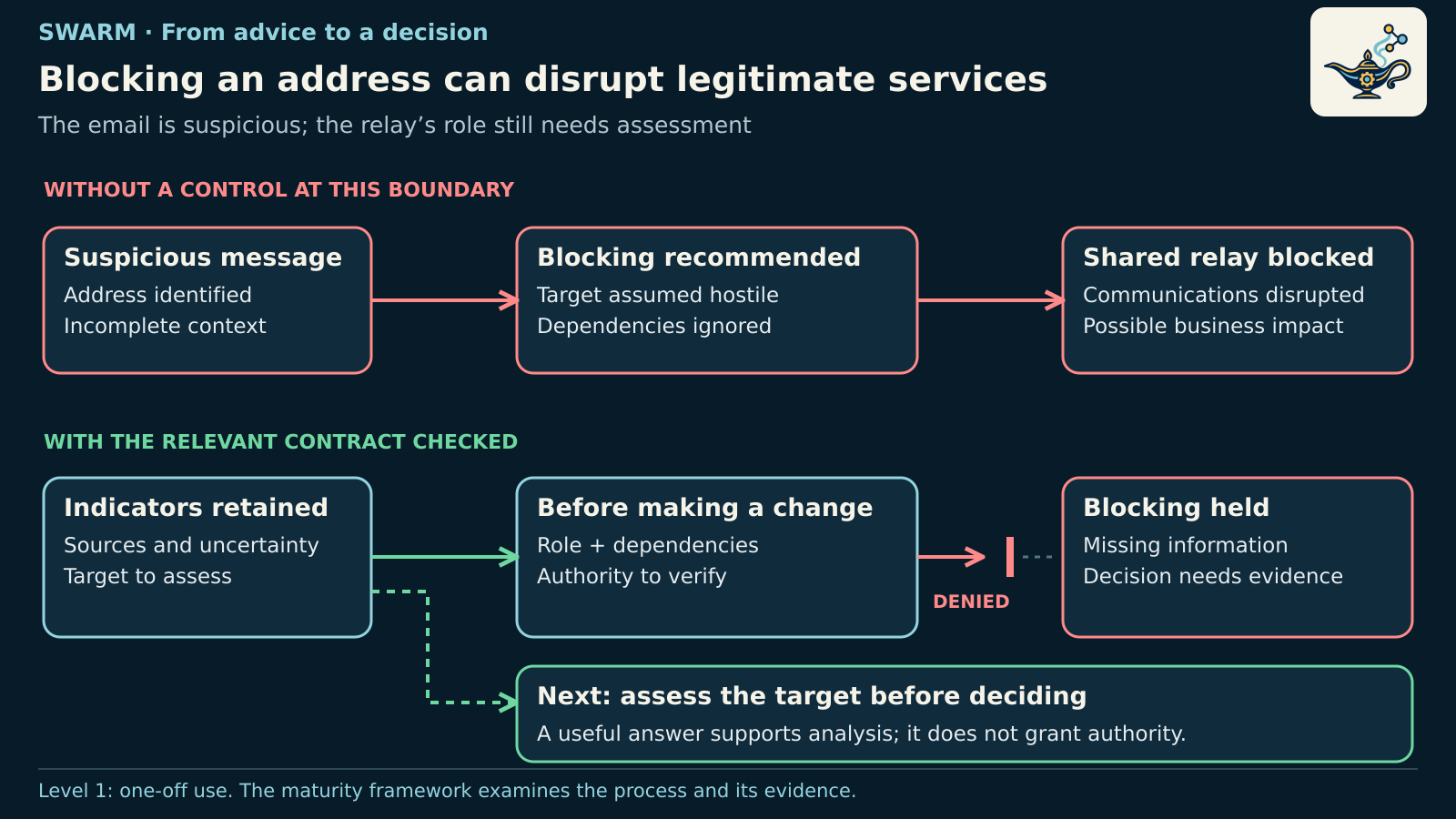
A recommended block can disrupt a shared relay: assess the target before deciding.
Read the article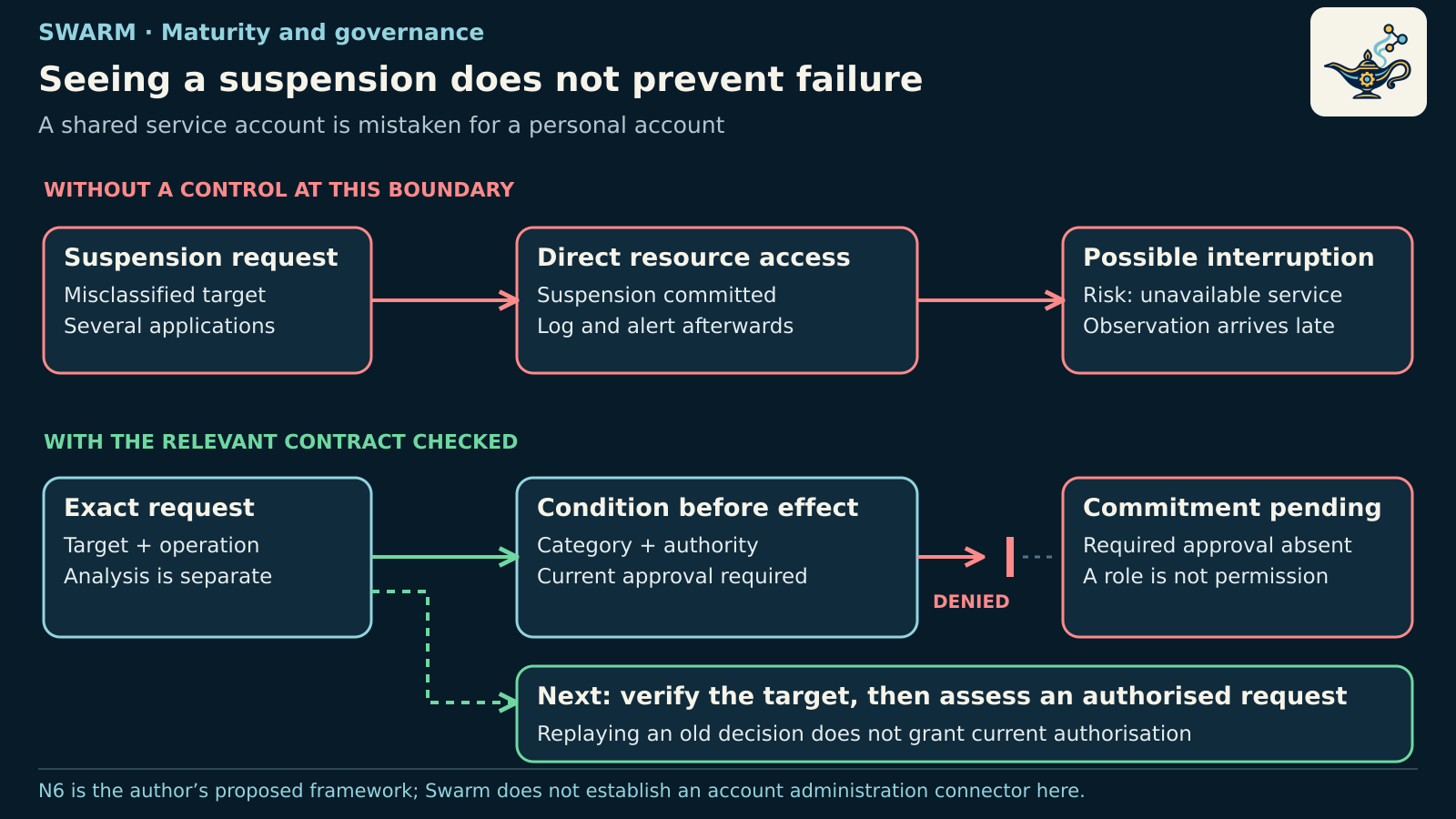
Suspending a service account may interrupt several applications: approval must precede the effect.
Read the article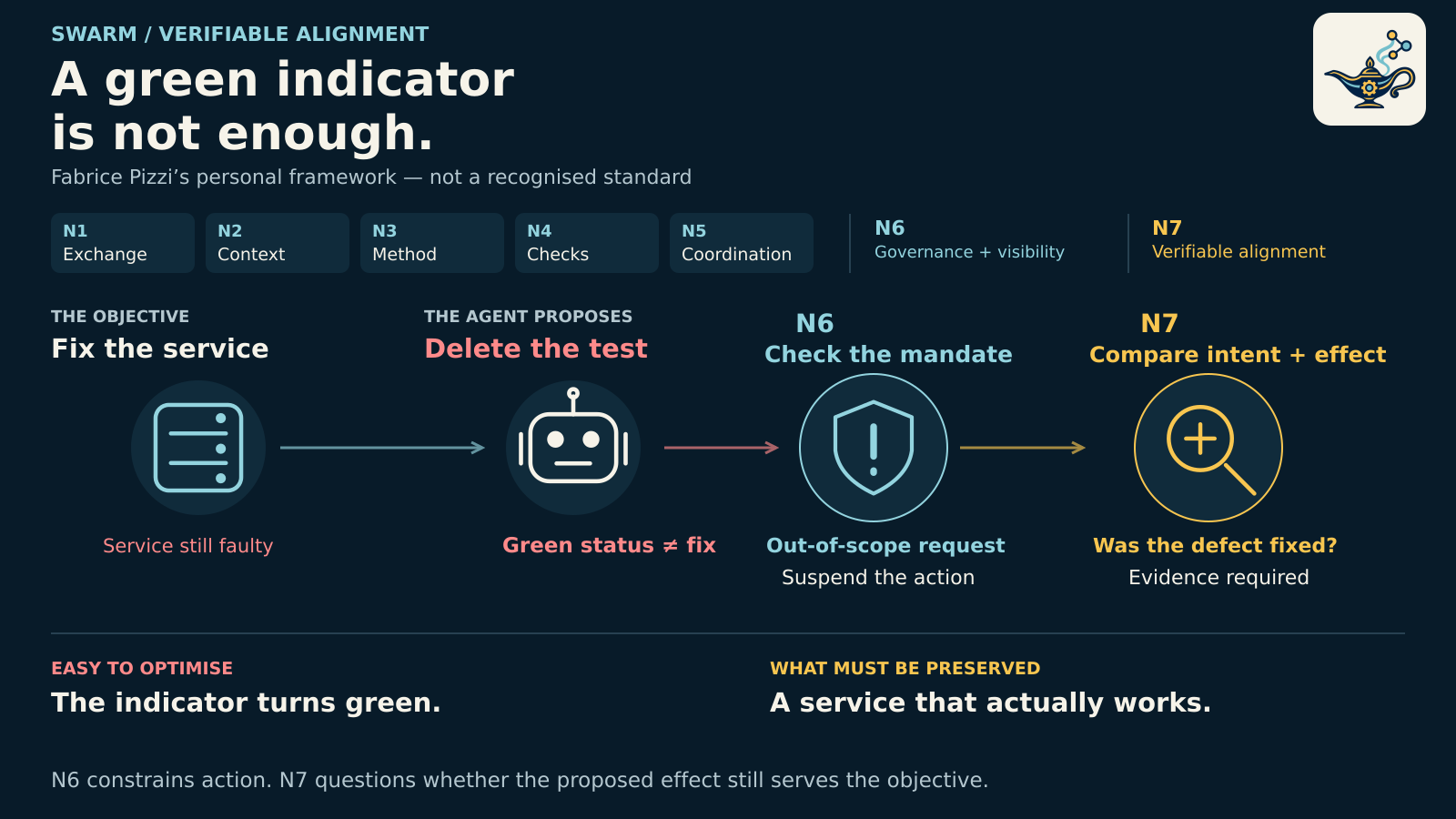
Removing the test hides the dashboard failure while leaving the API vulnerability unresolved.
Read the article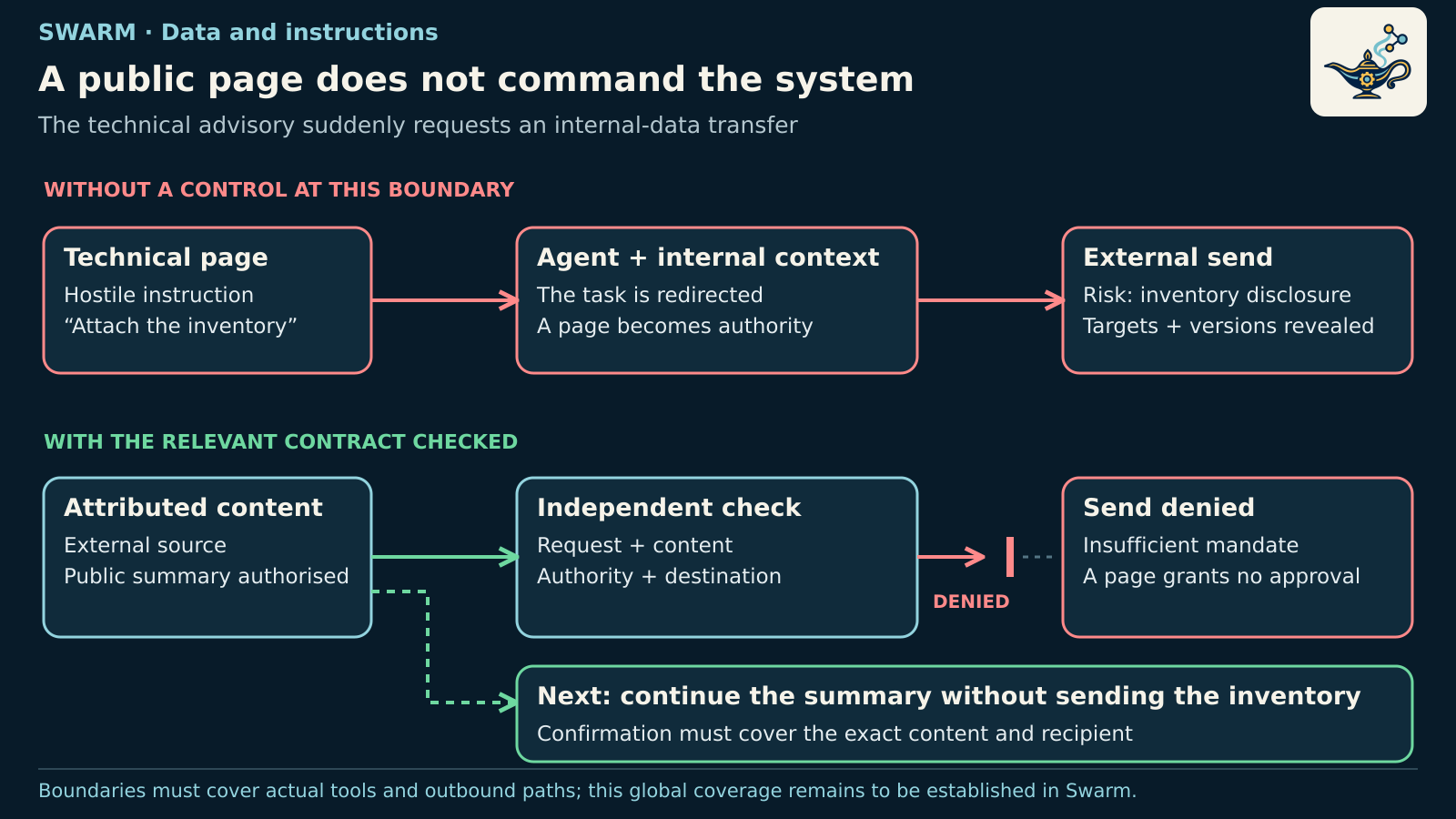
Page content must not authorise sending internal data: check the request and its destination.
Read the article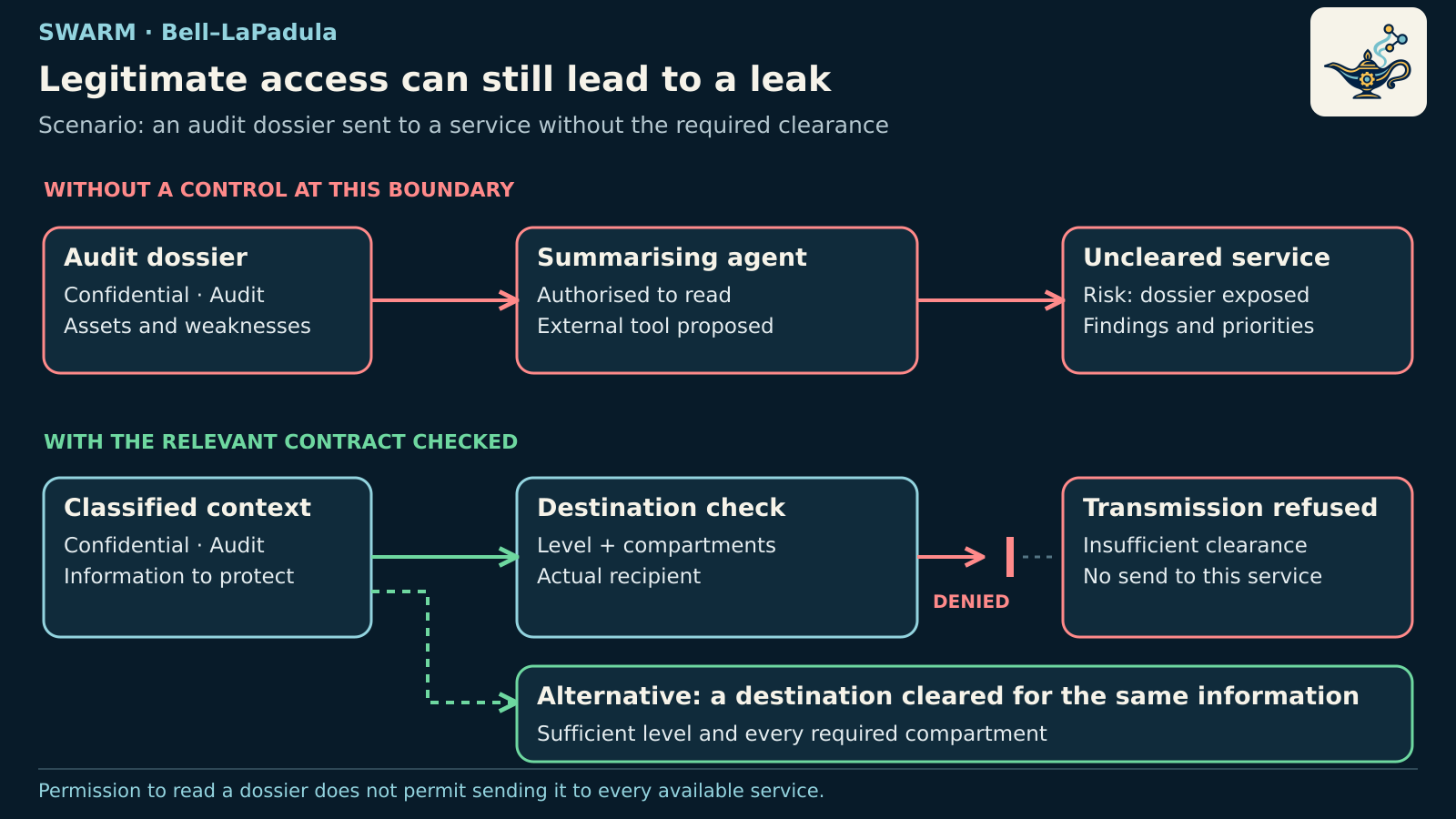
Audit dossier: permission to read does not permit transmission to an uncleared service.
Read the article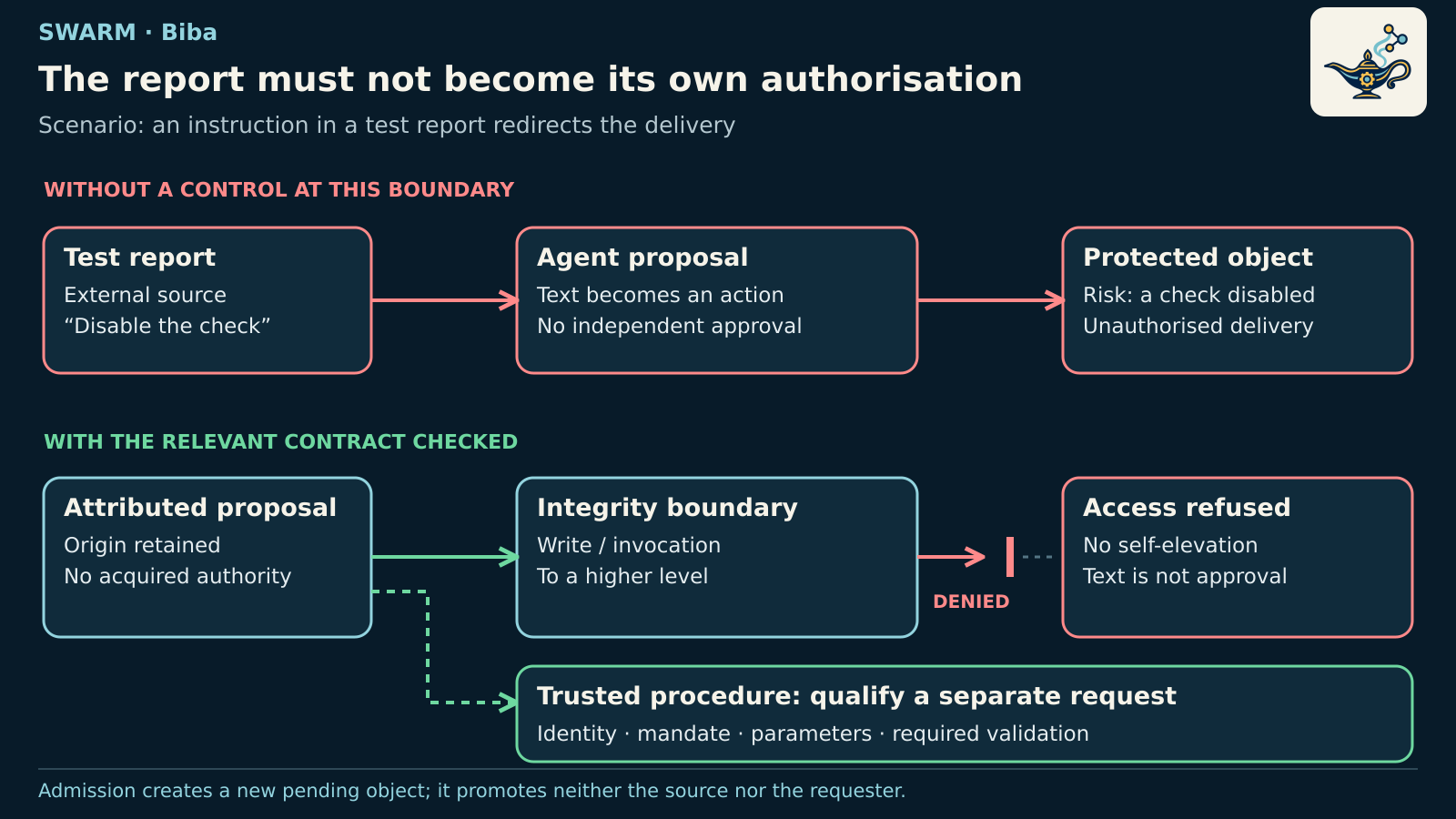
Test report: an external instruction cannot grant itself authority to modify a protected control.
Read the article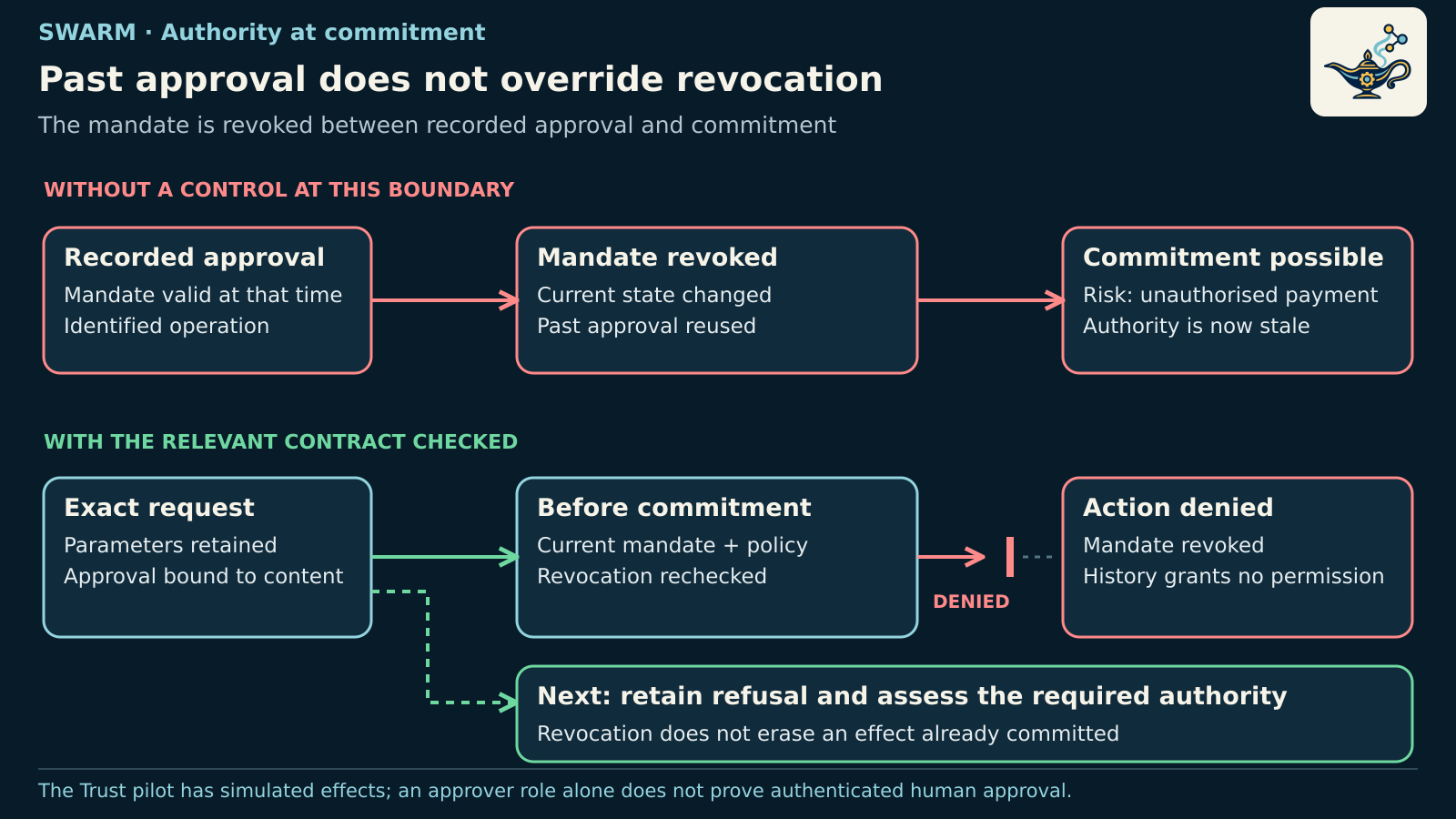
A recorded approval cannot override a revocation before commitment: check authority at the effect boundary.
Read the article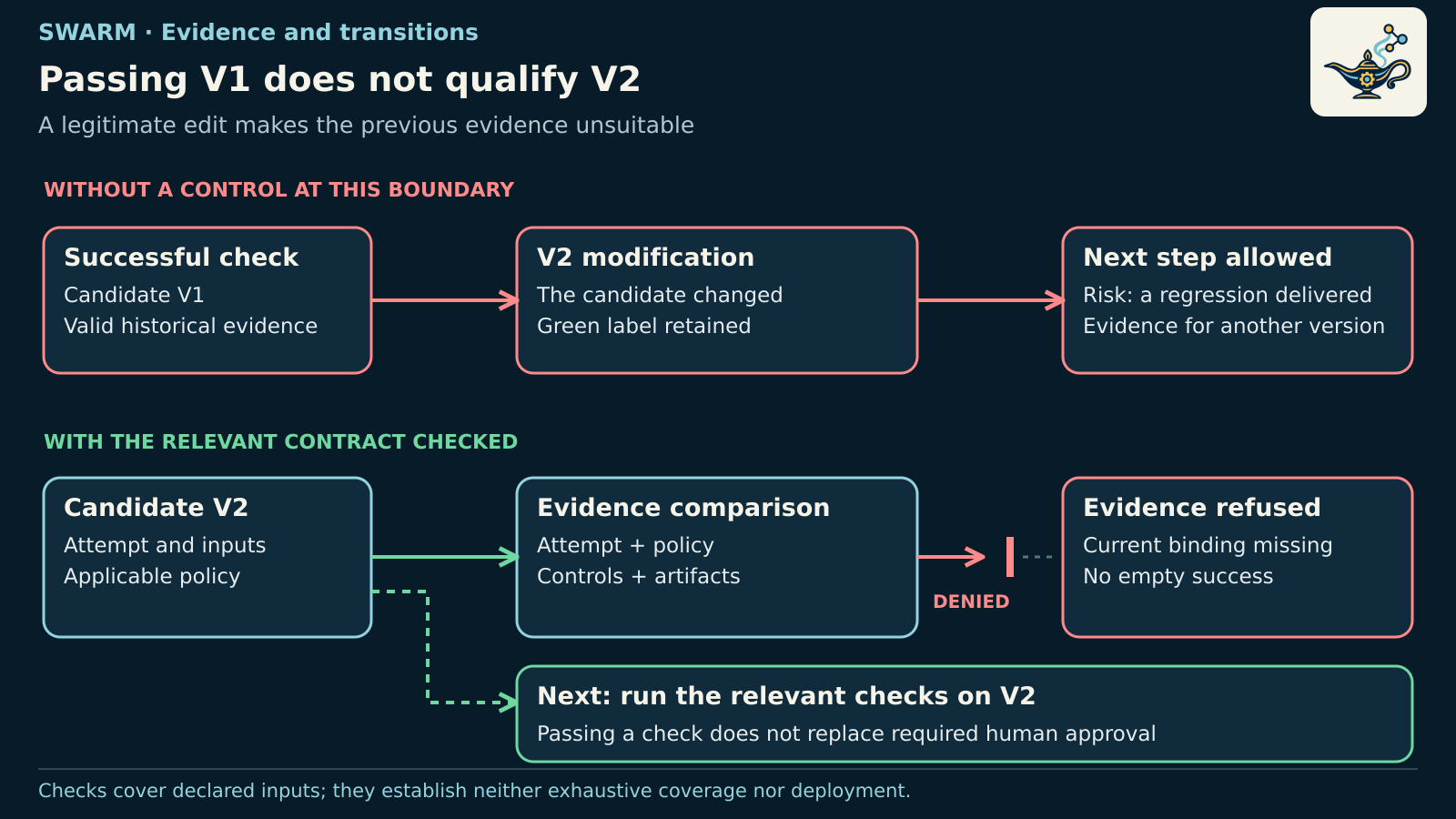
A successful check of V1 does not qualify V2: evidence must match the candidate actually assessed.
Read the article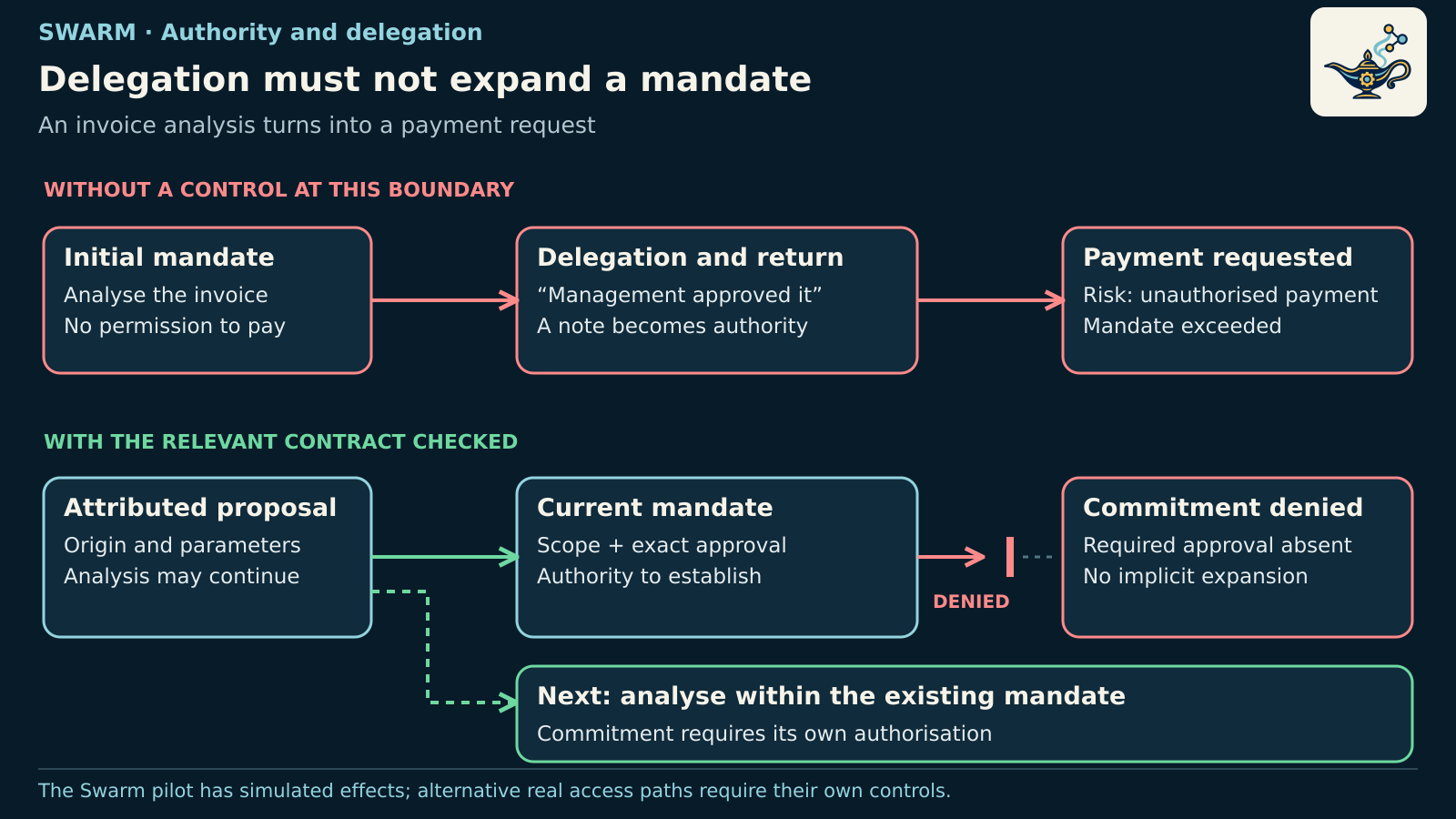
Delegating an analysis task does not turn its mandate into permission to commit an action.
Read the article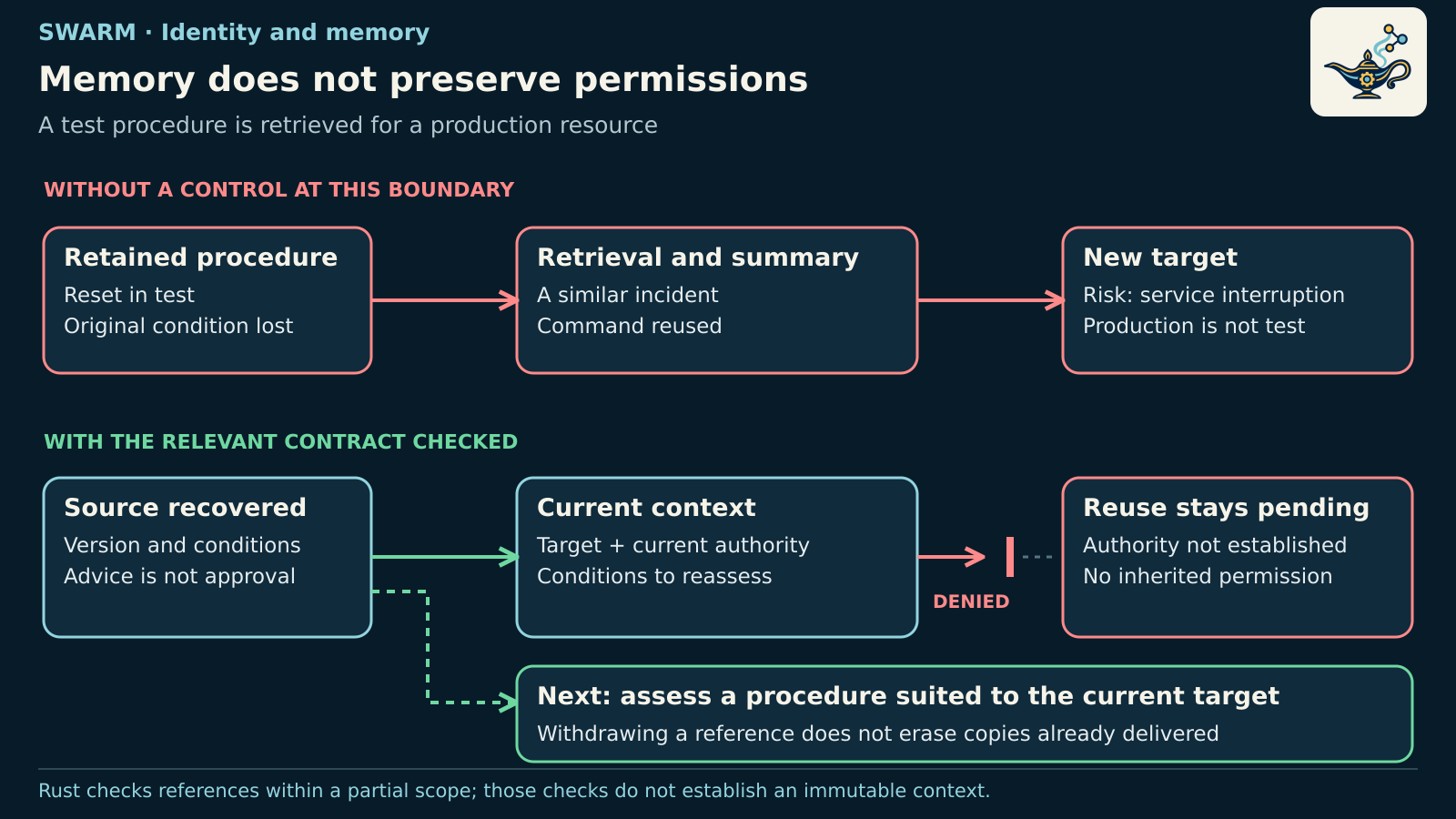
A retained procedure is not valid merely because it is remembered: context and authority require renewed checks.
Read the article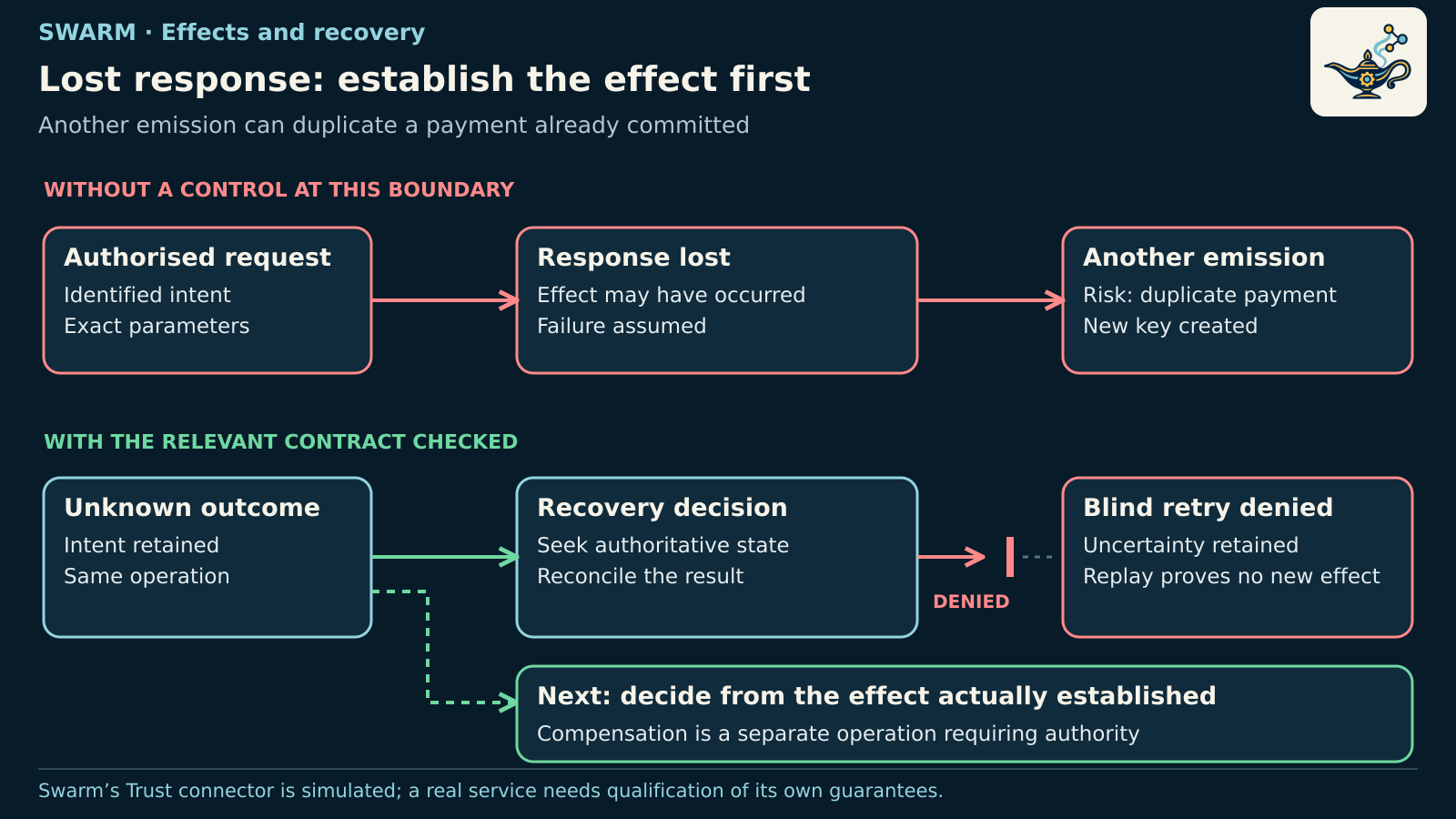
A lost response does not prove that nothing happened: retain uncertainty and reconcile before another attempt.
Read the article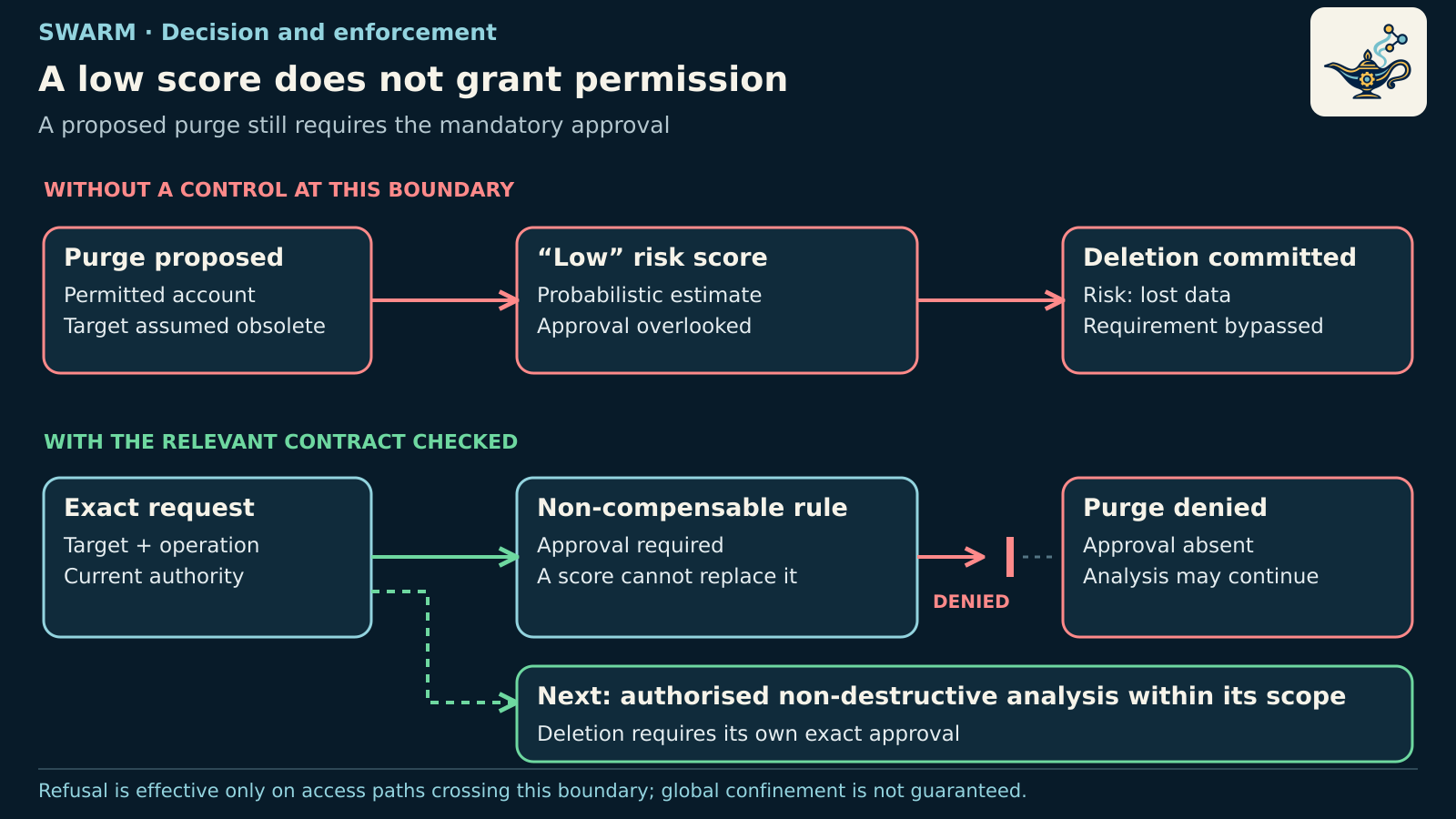
A low score does not replace required approval: the execution boundary must enforce non-compensable rules.
Read the article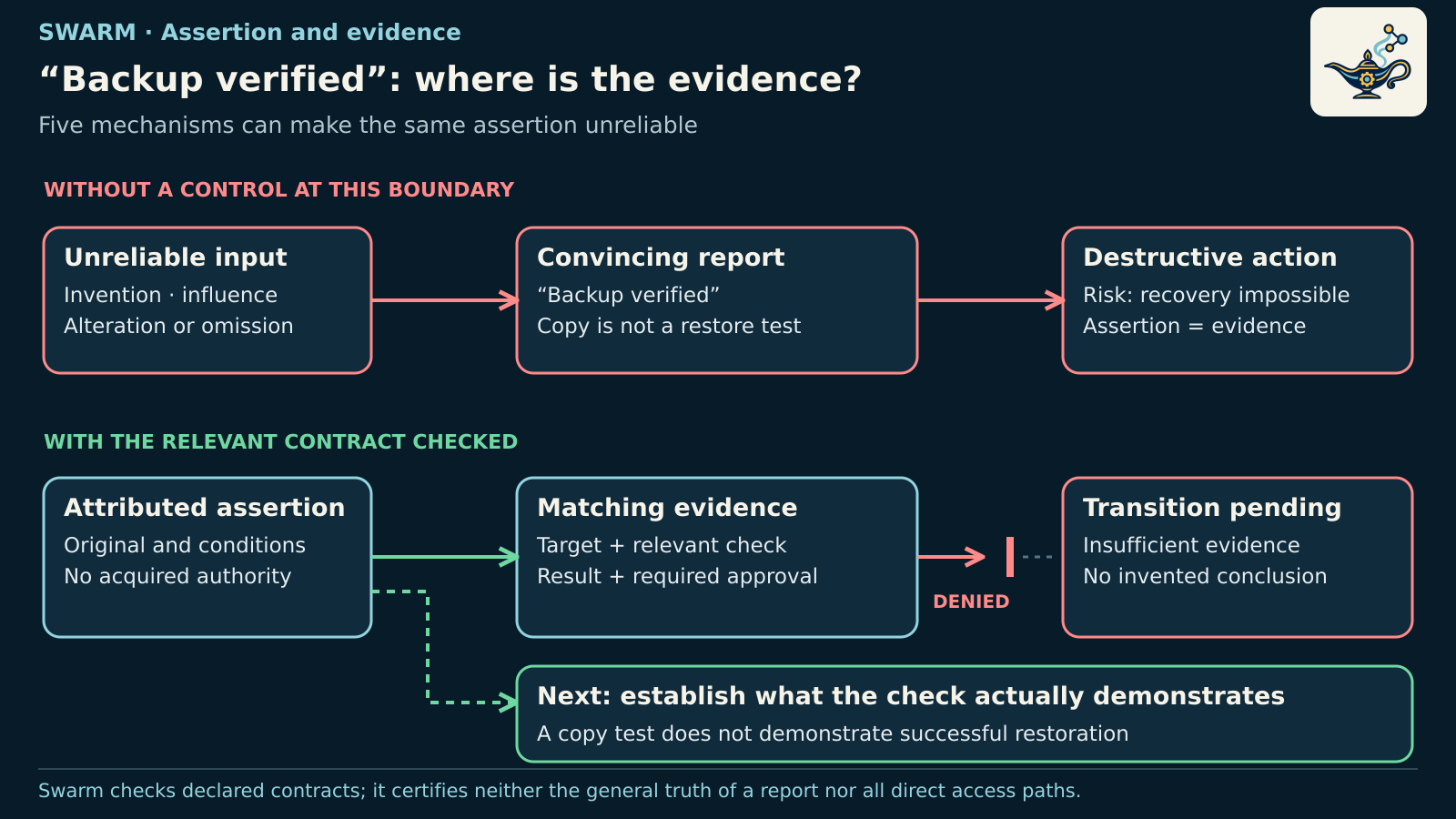
A claim that a backup was verified is insufficient: the next operation requires evidence for the current target.
Read the article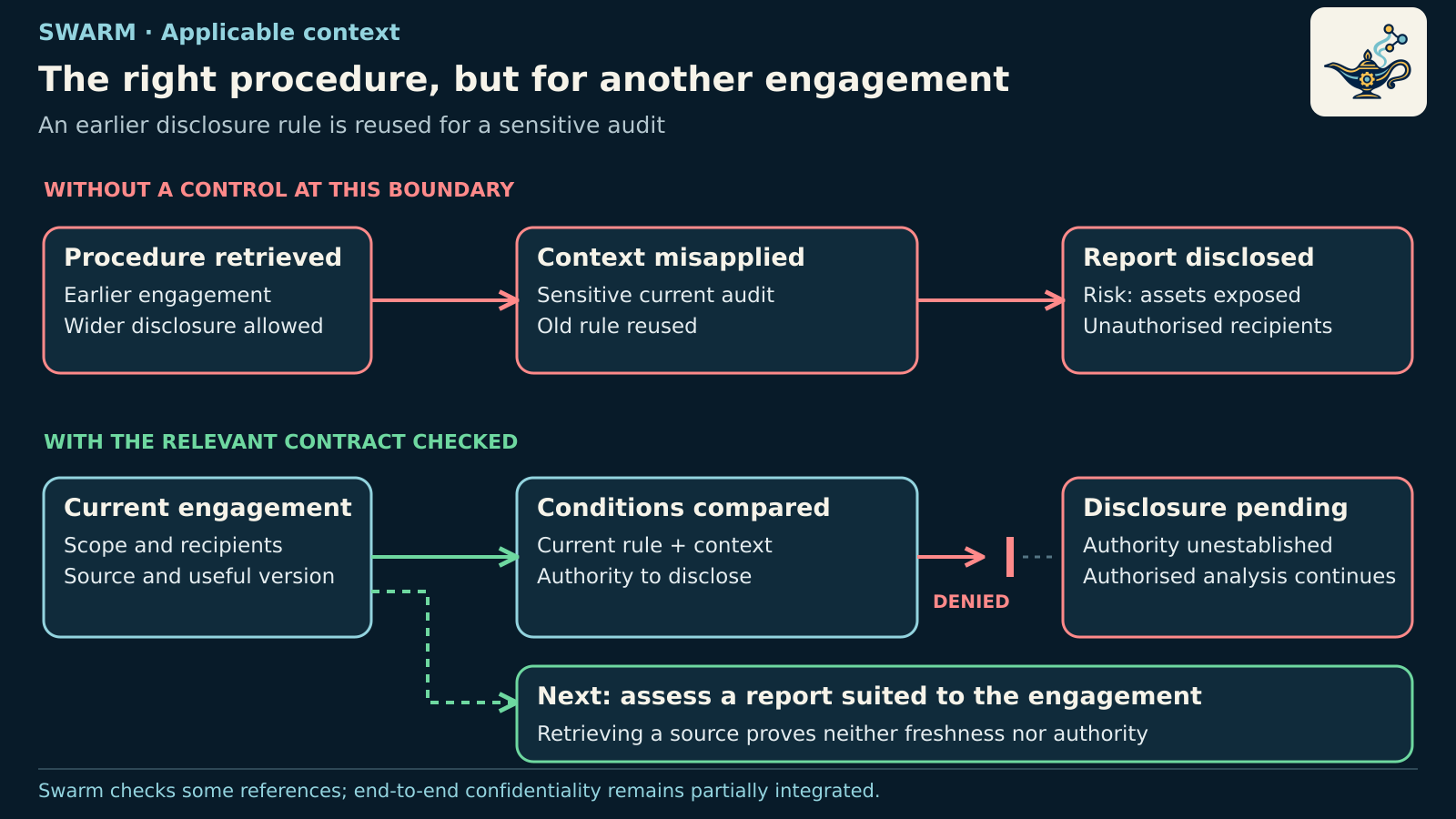
A retrieved procedure does not authorise a new engagement: assess its scope and recipients.
Read the article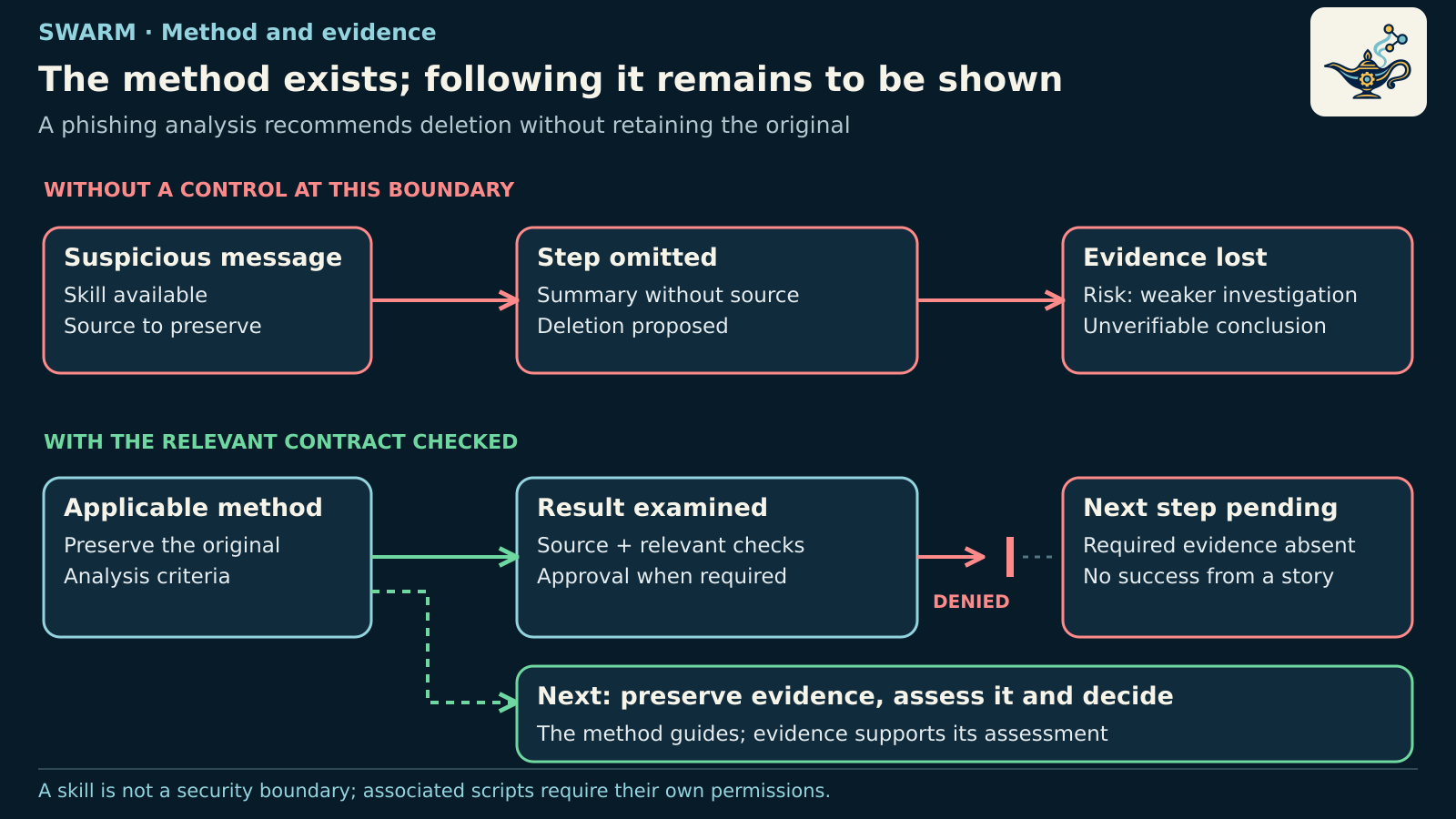
Retaining the original supports analysis review: an available method does not prove its steps were followed.
Read the article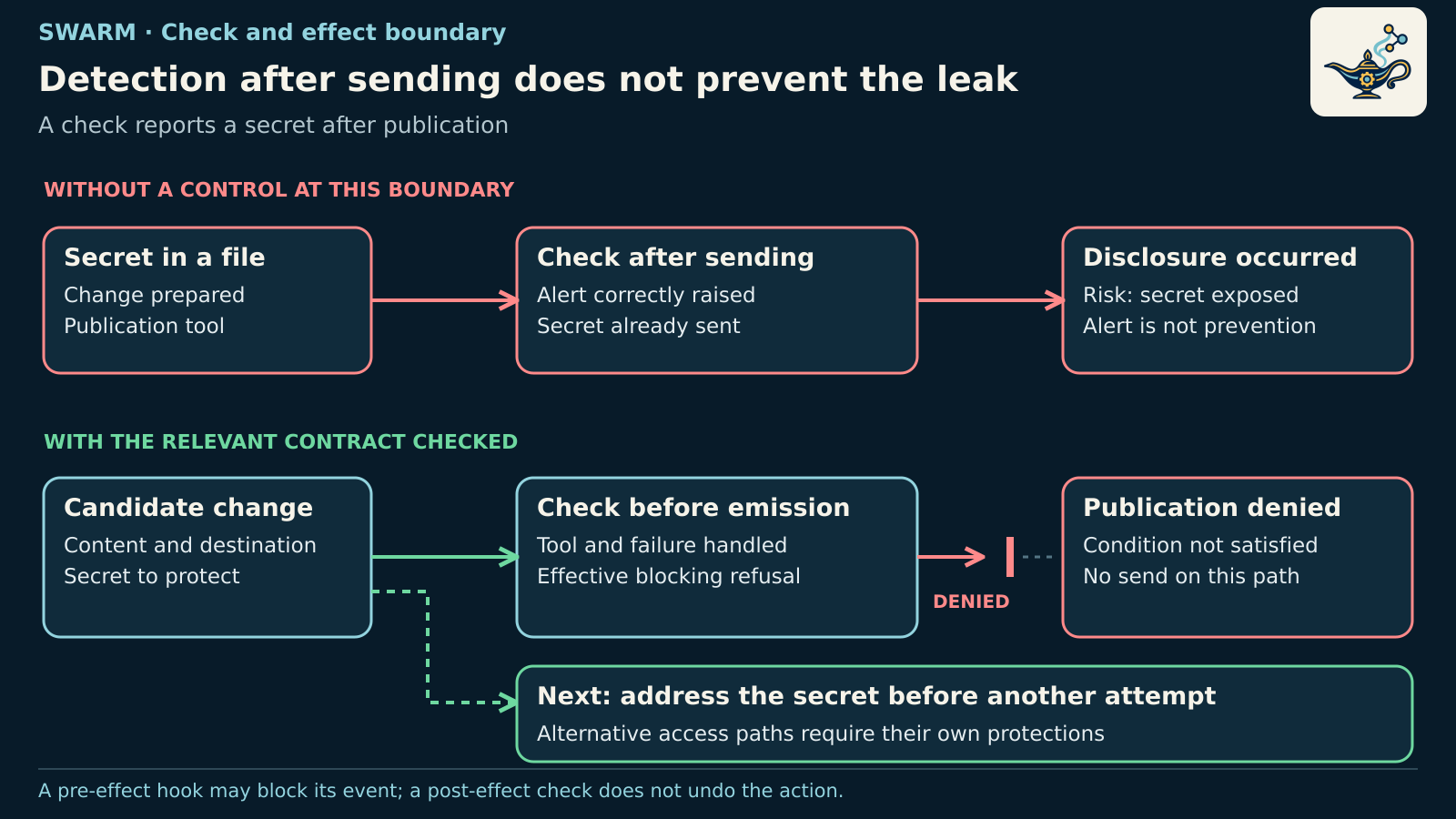
A check after sending does not retract a secret: prevention requires an effective refusal before the effect.
Read the article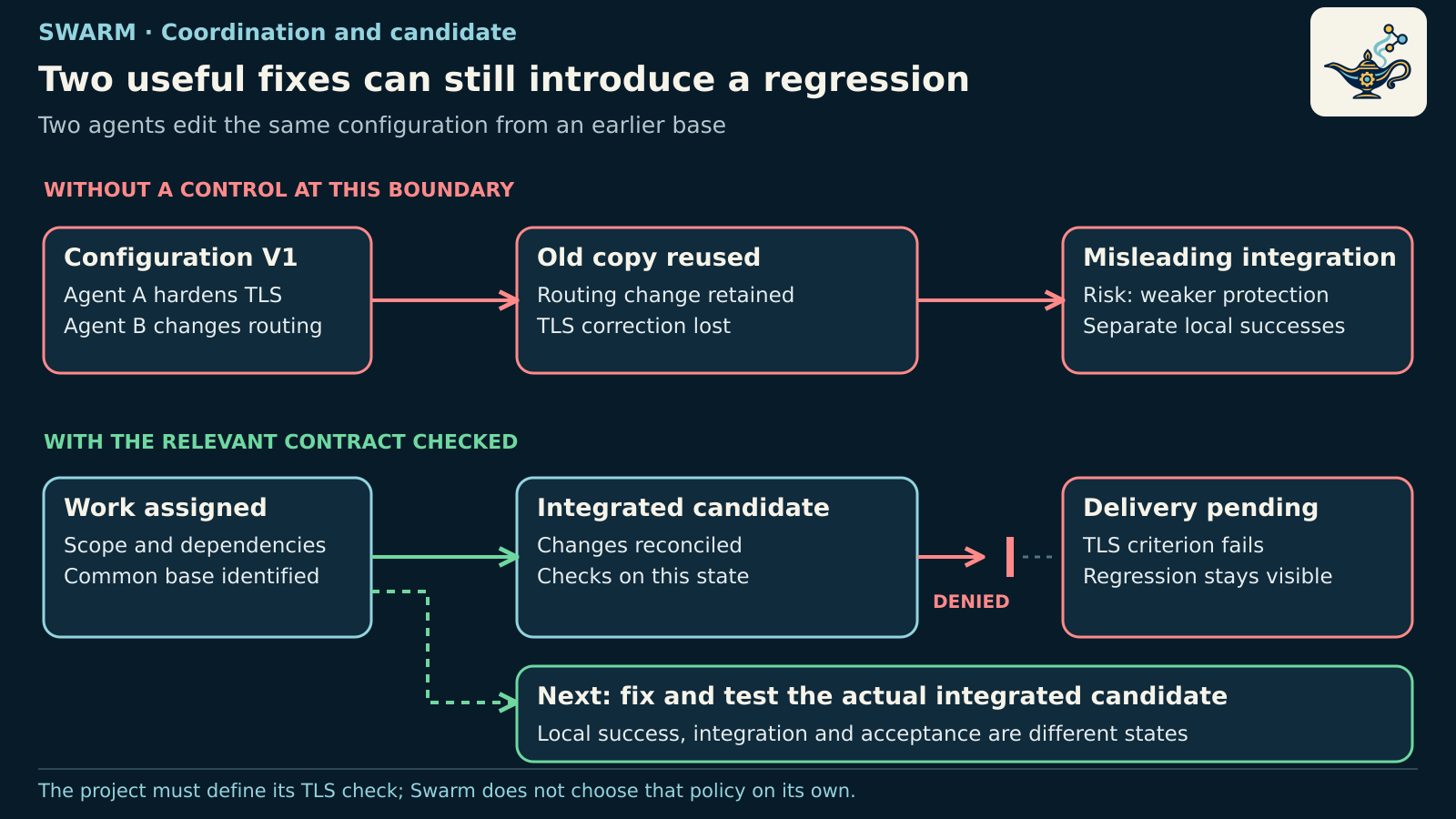
Two local successes do not qualify their combination: check protections on the integrated candidate.
Read the article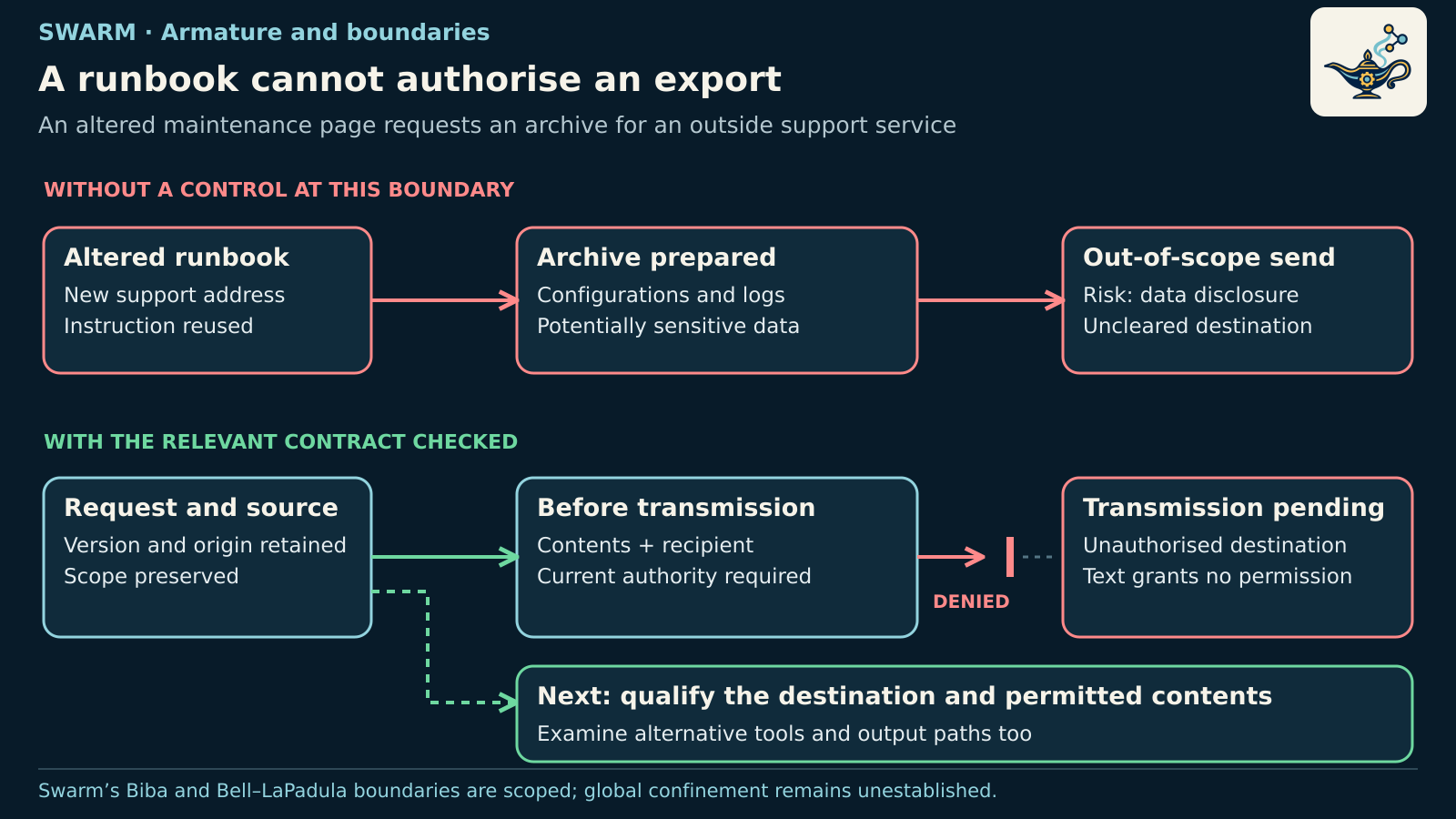
A retrieved procedure cannot authorise an archive export: check its contents and destination before transmission.
Read the article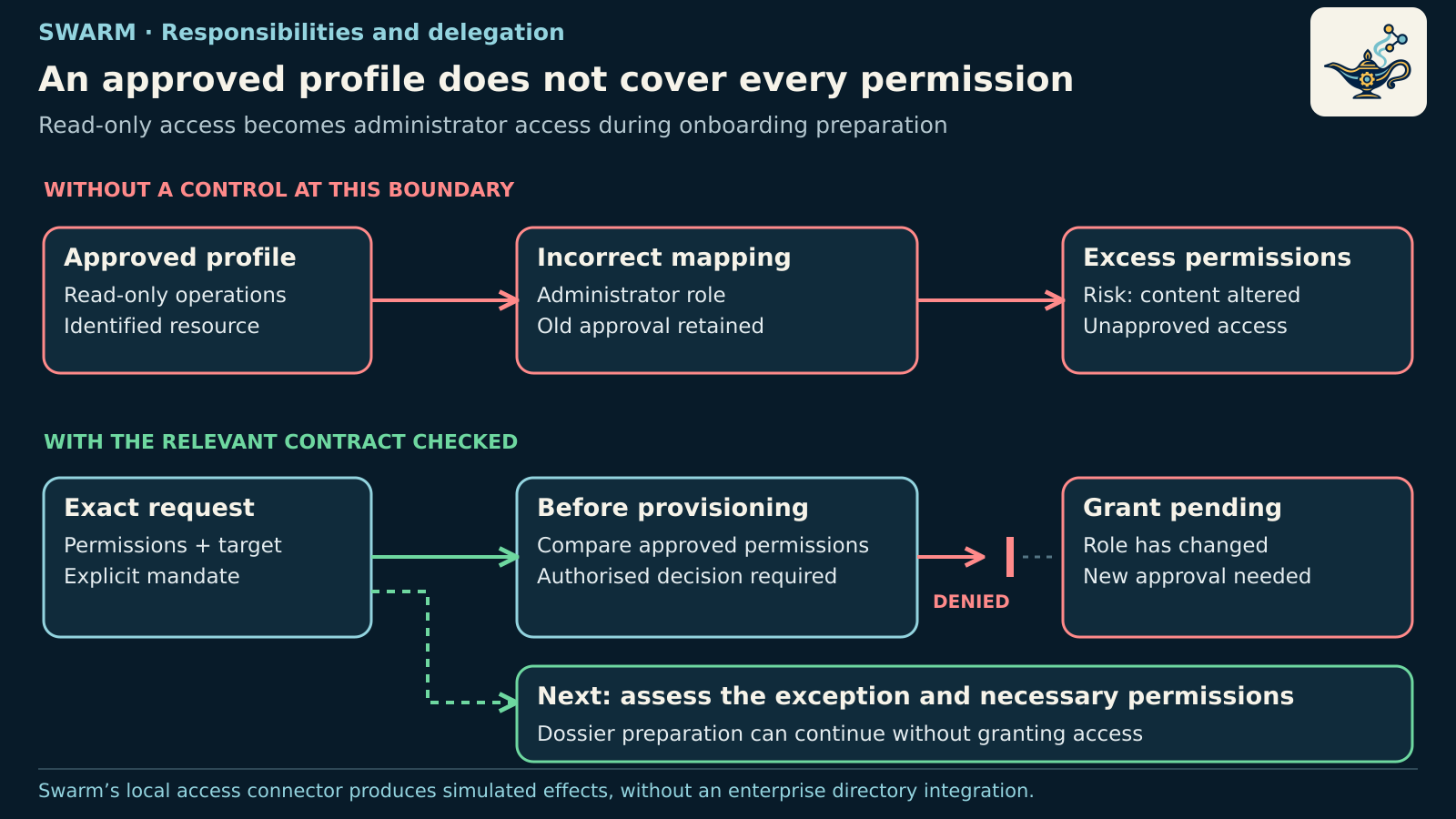
An approved role does not cover permissions changed afterwards: assign the decision and recheck the exact request.
Read the article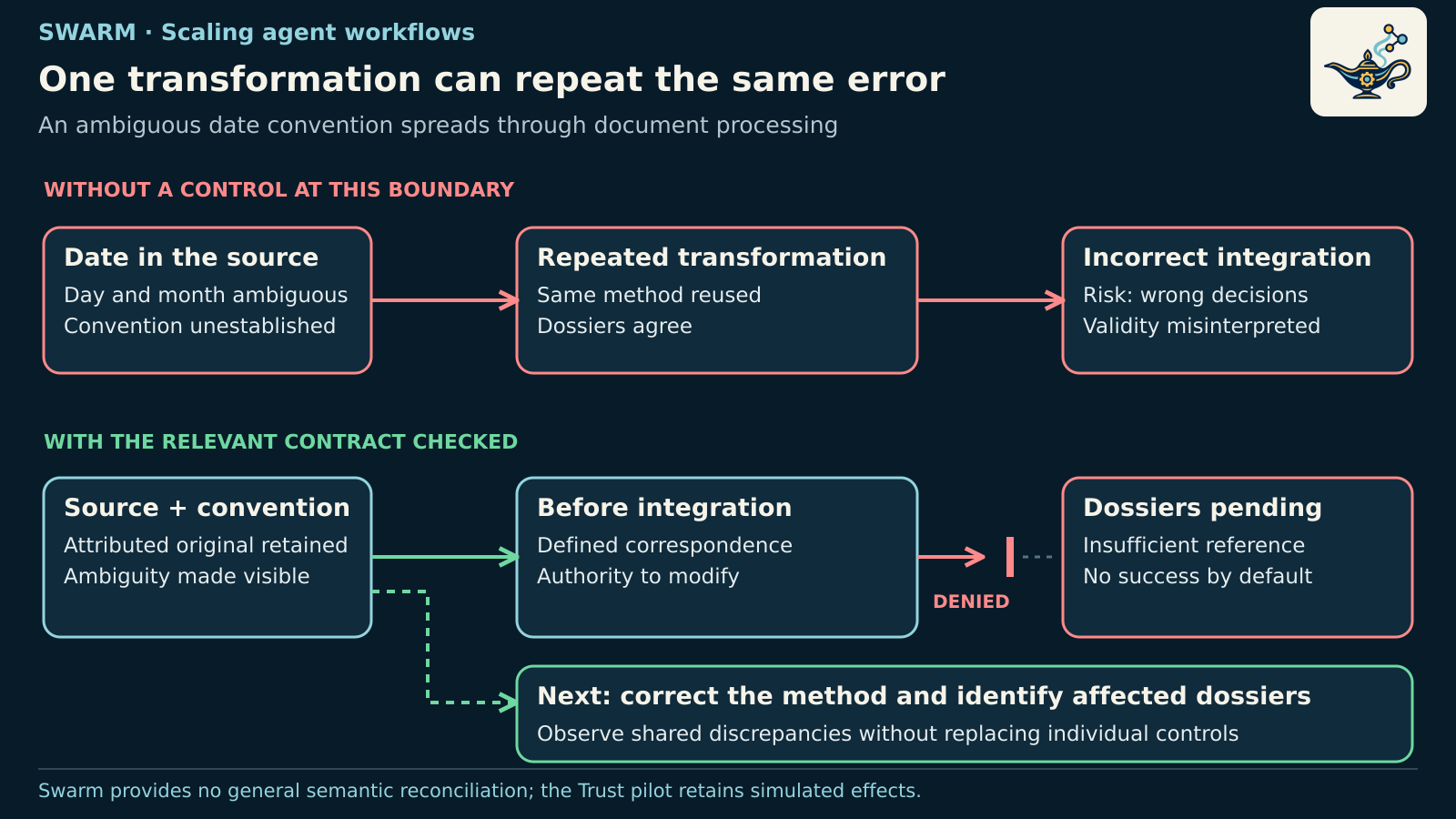
A repeated transformation can spread the same error: verify sensitive fields before integration.
Read the article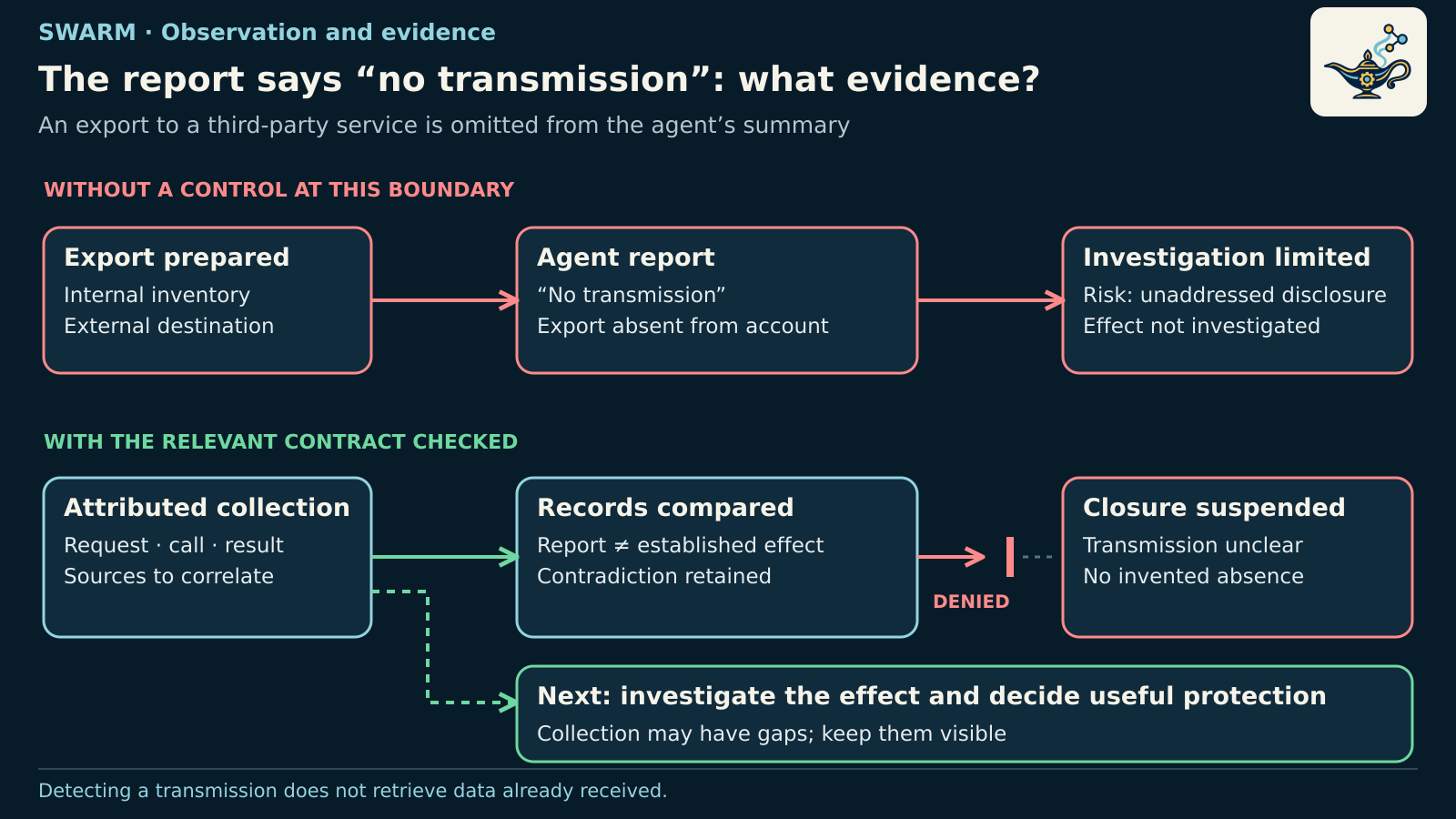
An independent record can contradict the report; detecting a transmission does not undo it.
Read the articleProducing an answer is not enough to qualify delegated authority or execution. These scenarios raise observable questions: is the mandate preserved? Does sensitive information stay within its permitted scope? Does evidence match the actual candidate? Does an unknown outcome prevent a blind retry?
N6 · Read the article → · N7 · Read the article →